Campgrounds in South Dakota
Discover camping in the Black Hills and pristine plains of the Mount Rushmore State
24
Campgrounds listed
100%
With photos
100%
Detailed descriptions
Campground
Top campground type
Highlights
Featured campgrounds in South Dakota
Explore by campground name letter
Jump to A-Z landing hubs for stronger discovery paths beyond South Dakota.
All campgrounds
Showing 24 campgrounds

Overview Located less than 1 mile north of Hot Springs, South Dakota sits one of the area's most perferred campgrounds. At the south end of Cold Brook Campground sits Cold Brook Lake, a popular destination for those looking to take a swim at the beach, snorkel in the crystal clear water or wet a line while trying to catch a variety of fish species. At the north end of the campground sits a wildlife area with a two-track trail that is good for a morning stroll or a short bike ride with the possibility of seeing wildlife. Recreation Cold Brook Lake is about 33 acres in size and it provides a quiet opportunity to wet a line and possibly catch a large mouth bass, northern pike, catfish, carp, rainbow trout, or various pan fish. Canoes, kayaks, paddleboards, or any other small non-gas motorized boat can commonly be seen on the lake. As the summer heats up, the beach tends to be a popular hangout for both locals and tourists. The non-motorized two-track path in the wildlife area is a great spot for a short hike or letting pets enjoy being off a leash. Other popular outdoor recreational opportunities include picnicking, playing at the playground, wildlife viewing, photography, and archery hunting. Archery hunting is permitted in designated areas only and both hunting and fishing regulations are established and enforced by the State of South Dakota. Facilities Cold Brook Lake is about 33 acres in size and it provides a quiet opportunity to wet a line and possibly catch a large mouth bass, northern pike, catfish, carp, rainbow trout, or various pan fish. Canoes, kayaks, paddleboards, or any other small non-gas motorized boat can commonly be seen on the lake. As the summer heats up, the beach tends to be a popular hangout for both locals and tourists. The non-motorized two-track path in the wildlife area is a great spot for a short hike or letting pets enjoy being off a leash. Other popular outdoor recreational opportunities include picnicking, playing at the playground, wildlife viewing, photography, and archery hunting. Archery hunting is permitted in designated areas only and both hunting and fishing regulations are established and enforced by the State of South Dakota. Natural Features Located in the Southern Black Hills of South Dakota, construction of Cold Brook Dam began in 1949 and was completed in 1953, under the Flood Control Act of 1941. Although the dam was originally built for flood control, it has created a park with approximately 450 acres of public lands and water that provides a variety of benefits to both the public and wildlife. Once here you will see how the rugged hills, crystal clear water and evergreen trees create a picturesque site. contact_info For local information, please call (605) 745-5476 or call (605) 450-8000 for general information. Nearby Attractions Popular nearby attractions include: Black Hills National Forest Wind Cave National Park The Mammoth Site Evans Plunge Jewel Cave National Monument Charges & Cancellations Reservation changes and cancellations can be made on Recreation.gov or by calling 1-877-444-6777. For more information on rules and policies regarding reservation cancellations and changes, please visit: https://www.recreation.gov/rules-reservation-policies .
View details →
Overview Located just 5 miles west of Hot Springs, SD is a hidden gem of a campground. Cottonwood Springs Campground is a quiet, peaceful campground tucked away in the southern part of the Black Hills of South Dakota. It offers beautiful scenic views within a short walk of each campsite. Recreation While Cottonwood Springs Lake is a small lake, it provides a quiet opportunity to wet a line and possibly catch a large mouth bass, rainbow trout, or various pan fish. Canoes, kayaks, paddleboards, or any other small non-gas motorized boat can commonly be seen on the lake. The non-motorized gravel path in the wildlife area is a great spot for a short hike or for letting pets enjoy being off a leash. Other popular outdoor recreational opportunities include picnicking, playing at the playground, wildlife viewing, photography, and archery hunting. Archery hunting is permitted in designated areas only and both hunting and fishing regulations are established and enforced by the State of South Dakota. Facilities While Cottonwood Springs Lake is a small lake, it provides a quiet opportunity to wet a line and possibly catch a large mouth bass, rainbow trout, or various pan fish. Canoes, kayaks, paddleboards, or any other small non-gas motorized boat can commonly be seen on the lake. The non-motorized gravel path in the wildlife area is a great spot for a short hike or for letting pets enjoy being off a leash. Other popular outdoor recreational opportunities include picnicking, playing at the playground, wildlife viewing, photography, and archery hunting. Archery hunting is permitted in designated areas only and both hunting and fishing regulations are established and enforced by the State of South Dakota. Natural Features Located in the Southern Black Hills of South Dakota, construction of Cottonwood Springs Dam began in 1968 and was completed in 1969. Cottonwood Springs Dam began construction in 1968 and was completed in 1969. Although the dam was originally built for flood control, it has created a park with approximately 600 acres of public lands and water that provides a variety of benefits to both the public and wildlife. Once here you will see how the rugged hills and evergreen trees create a picturesque site. contact_info For local information, please call (605) 745-5476 or call (605) 450-8000 for general information. Nearby Attractions Popular nearby attractions include: Wind Cave National Park Black Hills National Forest The Mammoth Site Evans Plunge Buffalo Gap National Grassland Jewel Cave National Monument Badlands National Park Custer State Park Crazy Horse Memorial Mount Rushmore National Memorial Charges & Cancellations Reservation changes and cancellations can be made on Recreation.gov or by calling 1-877-444-6777. For more information on rules and policies regarding reservation cancellations and changes, please visit: https://www.recreation.gov/rules-reservation-policies .
View details →
Overview Boxelder Forks Campground is host to 13 campsites, tucked into the Ponderosa Pines along Boxelder Creek near the town of Nemo, South Dakota. The campground offers easy access to both motorized and non-motorized recreation. The Centennial Trail is just 1 mile east of the campground and serves as a beautful host for hiking, biking, horseback riding and motorized recreation. Dozens of miles of OHV trails are in close proximity to the campground. Meanwhile, fishing access is just steps away from the campground. Recreation Dozens of miles of OHV trails originate in the area. The Centennial Trail also offers non-motorized recreation for those interested in hiking, biking or horseback riding. Facilities Dozens of miles of OHV trails originate in the area. The Centennial Trail also offers non-motorized recreation for those interested in hiking, biking or horseback riding. Natural Features The campground is tucked into the Ponderosa Pines and White Spruce along Boxelder Creek. Boxelder Creek offers access to fishing for Rainbow Trout and Brook Trout. The surrounding forest hosts a variety of wildlife including: elk, deer, squirrels and a host of birds species. contact_info For facility specific information, please call (605) 574-4402.
View details →
Overview Surrounded by the vast, open prairie and featuring expansive views of the Badlands, Cedar Pass Campground is a great base camp from which to explore Badlands National Park. Featuring 96 sites, this seasonal campground is open from late March through mid-October, and is conveniently located within easy walking distance of Cedar Pass Lodge & Restaurant, and the Ben Reifel Visitor Center. Recreation An evening program led by park rangers is held nightly at the Cedar Pass Amphitheater. This event runs from Memorial Day to Labor Day, beginning each evening with a half-hour educational talk about the Badlands, covering a wide array of topics that change every evening. Once the educational part of the presentation finishes, the rangers begin a guided night sky viewing program. Interesting facts and features of our night sky will be explored and pointed out for you via laser, and telescopes are often provided to view star clusters, planets, and the Milky Way. The Ampitheater parking lot is conveniently located at the entrance to Cedar Pass Campground, in easy walking distance for most campers! For evening program start times, please see the Ben Reifel Visitor Center, Cedar Pass Lodge, or the host kiosk at the campground entrance. Facilities An evening program led by park rangers is held nightly at the Cedar Pass Amphitheater. This event runs from Memorial Day to Labor Day, beginning each evening with a half-hour educational talk about the Badlands, covering a wide array of topics that change every evening. Once the educational part of the presentation finishes, the rangers begin a guided night sky viewing program. Interesting facts and features of our night sky will be explored and pointed out for you via laser, and telescopes are often provided to view star clusters, planets, and the Milky Way. The Ampitheater parking lot is conveniently located at the entrance to Cedar Pass Campground, in easy walking distance for most campers! For evening program start times, please see the Ben Reifel Visitor Center, Cedar Pass Lodge, or the host kiosk at the campground entrance. Natural Features Cedar Pass Campground is surrounded by prairie grasslands and Badlands buttes, or geologic formations. These formations contain sandstone, siltstone, mudstone, claystone, limestone, volcanic ash, and shale. The natural beauty of this landscape makes for stunning sunrises and sunsets, while low population density and very little light pollution creates a beautiful night sky most evenings. Nearby Attractions Ben Reifel Vistor Center Cedar Pass Lodge Minuteman National Historic Site Prairie Homestead Mount Rushmore (1 hour, 45 mins) Custer State Park (1 hour, 45 mins)
View details →
Overview Situated in a heavily forested area adjacent to Cook Lake, this campground is a peaceful setting for guests seeking recreation and relaxation in the Black Hills National Forest in Wyoming. Some sites in the campground are widely spaced and open up to views overlooking the lake, and others sit snugly along a hillside. Separation, rather than vegetation, provide visitors with a sense of privacy. Tall mature trees and grass underbrush give the campground a groomed character. Recreation The forest offers accessible recreation for all ages. Visitors can take advantage of opportunities for hiking, fishing, horseback riding, mountain biking, and riding off-highway vehicles (OHVs) on moderate terrain. Approximately 4 miles of hiking and bicycling trails are available at the recreation area. Adjacent to the campground is Cook Lake, an ideal spot for fishing and boating. The lake supports populations of rainbow and brown trout, a variety of sunfish, and catfish. The Cook Lake Trail, along with Loop A, has been closed due to a recent landslide. However there are still plenty of opportunities for outdoor recreation of all types in the area. Facilities The forest offers accessible recreation for all ages. Visitors can take advantage of opportunities for hiking, fishing, horseback riding, mountain biking, and riding off-highway vehicles (OHVs) on moderate terrain. Approximately 4 miles of hiking and bicycling trails are available at the recreation area. Adjacent to the campground is Cook Lake, an ideal spot for fishing and boating. The lake supports populations of rainbow and brown trout, a variety of sunfish, and catfish. The Cook Lake Trail, along with Loop A, has been closed due to a recent landslide. However there are still plenty of opportunities for outdoor recreation of all types in the area. Natural Features Located in western South Dakota and northeastern Wyoming, Black Hills National Forest encompasses nearly 1.25 million acres of rugged rock formations, canyons and gulches, open grassland parks, tumbling streams, deep blue lakes, and unique caves. Derived from the Lakota language, the words "Paha Sapa," meaning "hills that are black," honor the dark, pine-covered hills rising several thousand feet above the surrounding prairie. Wildlife in the area abounds. Bighorn sheep navigate mountainous terrain, while elk, deer and pronghorn gather in forests and prairies. Bald eagles, hawks, osprey, peregrine falcon, and hundreds of other bird species can be found in the forest, especially along streams, lakes and rivers. Mountain lions, although rarely seen, also call this area home. contact_info For facility specific information, please call (605) 574-4402. Nearby Attractions A hike to Warren Peak Lookout Tower makes a scenic day trip for guests. Devils Tower National Monument is also a great location to visit. Established as the first United States National Monument on September 24, 1906, by President Theodore Roosevelt, this unique geological formation is valued for its natural, cultural, and recreational significance. Charges & Cancellations No refunds will be given for weather or related events.
View details →
Overview Reuter Campground, located on a hillside of Ponderosa pine and grassy understory, offering a peaceful setting for guests seeking recreation and relaxation in northeastern Wyoming's Black Hills National Forest. The campground is named after Emil Reuter, a German immigrant who made his way into the canyon in 1893 and spent the rest of his life prospecting in the area. Recreation Black Hills National Forest offers a multitude of recreational opportunites throughout all seasons. Hiking, fishing, horseback riding, mountain biking, and riding off-highway vehicles are popular in summer and early autumn. Winter landscapes are ideal for snowshoeing, skiing and snowmobiling. From this campground, visitors can access the Sundance Trail System from Reuter Trailhead. The secluded trails of this system weave through a network of densely forested canyons and open ridges that form the Bearlodge Mountains. Some ridge tops look out to the Custer Expedition Route, Devils Tower, and the Twin Missouri Buttes. Elk, deer and turkey are some of the more common wildlife seen along the trail. Parts of the trail system have existed since the 1800s. As routes to reliable water and the only access to some parts of the Bearlodge Mountains, they played a key role in the rich mining history of the area. The trail system is maintained for hiking, horseback riding, bicycling and cross-country skiing. Motorized vehicle traffic is not allowed; however, some portions of trails follow existing Forest Service roads open for motorized use. Facilities Black Hills National Forest offers a multitude of recreational opportunites throughout all seasons. Hiking, fishing, horseback riding, mountain biking, and riding off-highway vehicles are popular in summer and early autumn. Winter landscapes are ideal for snowshoeing, skiing and snowmobiling. From this campground, visitors can access the Sundance Trail System from Reuter Trailhead. The secluded trails of this system weave through a network of densely forested canyons and open ridges that form the Bearlodge Mountains. Some ridge tops look out to the Custer Expedition Route, Devils Tower, and the Twin Missouri Buttes. Elk, deer and turkey are some of the more common wildlife seen along the trail. Parts of the trail system have existed since the 1800s. As routes to reliable water and the only access to some parts of the Bearlodge Mountains, they played a key role in the rich mining history of the area. The trail system is maintained for hiking, horseback riding, bicycling and cross-country skiing. Motorized vehicle traffic is not allowed; however, some portions of trails follow existing Forest Service roads open for motorized use. Natural Features Stretching across northeastern Wyoming and western South Dakota, Black Hills National Forest encompasses nearly 1.25 million acres of rugged rock formations, canyons and gulches, open grassland parks, tumbling streams, deep blue lakes, and unique caves. Derived from the Lakota language, the words "Paha Sapa," meaning "hills that are black," honor the dark, pine-covered hills rising several thousand feet above the surrounding prairie. Bighorn sheep navigate mountainous terrain, while elk, deer and pronghorn gather in forests and prairies. Bald eagles, hawks, osprey, peregrine falcon, and hundreds of other bird species can be found in the forest, especially along streams, lakes and rivers. Mountain lions, although rarely seen, also call this area home. Nearby Attractions Warren Peak Lookout Tower, approximately 4 miles north of the campground on Forest Service Road 838, provides a panoramic view of the landscape extending into South Dakota and Wyoming. Devils Tower National Monument is also a great location to visit. Established as the first United States National Monument on September 24, 1906, by President Theodore Roosevelt, this unique geological formation is valued for its natural, cultural, and recreational significance. contact_info For facility specific information, please call (605) 574-4402. Charges & Cancellations No refunds will be given for weather or related events.
View details →
Overview Bismarck Lake Campground is set amidst a scattering of aspen groves and Ponderosa pine on the southeast edge of Bismarck Lake at 5,000 feet. This is a great place for visitors seeking recreation and relaxation in the Black Hills National Forest. Acess to this campground is through Custer State Park near the West Highway 16A entrance. Sites in the campground are widely spaced and open up to views of lakes, providing adequate privacy for visitors. Recreation The forest offers accessible recreation for all ages and abilities. Visitors can take advantage of opportunities for hiking, fishing, horseback riding, mountain biking, and riding off-highway vehicles (OHVs) on moderate terrain. At the campground, a short foot trail traverses the forested shoreline, offering opportunities for birding in early morning or picnicking in the afternoon. For those seeking higher elevations, a day-long trek to the summit of nearby Black Elk Peak is worth the effort. Black Elk Peak is the highest natural point in the United States east of the Rocky Mountains. Most of the summit is bare granite and offers expansive views of the surrounding area. An old stone tower (Harney Lookout Tower) at the top, once used as a fire lookout, is still open to hikers. Adjacent to the campground is Bismarck Lake, an ideal spot for fishing and boating. The lake supports populations of rainbow and brown trout, a variety of sunfish, smallmouth bass, northern pike, and catfish. Facilities The forest offers accessible recreation for all ages and abilities. Visitors can take advantage of opportunities for hiking, fishing, horseback riding, mountain biking, and riding off-highway vehicles (OHVs) on moderate terrain. At the campground, a short foot trail traverses the forested shoreline, offering opportunities for birding in early morning or picnicking in the afternoon. For those seeking higher elevations, a day-long trek to the summit of nearby Black Elk Peak is worth the effort. Black Elk Peak is the highest natural point in the United States east of the Rocky Mountains. Most of the summit is bare granite and offers expansive views of the surrounding area. An old stone tower (Harney Lookout Tower) at the top, once used as a fire lookout, is still open to hikers. Adjacent to the campground is Bismarck Lake, an ideal spot for fishing and boating. The lake supports populations of rainbow and brown trout, a variety of sunfish, smallmouth bass, northern pike, and catfish. Natural Features Located in western South Dakota and northeastern Wyoming, Black Hills National Forest encompasses nearly 1.25 million acres of rugged rock formations, canyons and gulches, open grassland parks, tumbling streams, deep blue lakes, and unique caves. Derived from the Lakota language, the words "Paha Sapa," meaning "hills that are black," honor the dark, pine-covered hills rising several thousand feet above the surrounding prairie. Wildlife in the area abounds. Bighorn sheep navigate mountainous terrain, while elk, deer and pronghorn gather in forests and prairies. Bald eagles, hawks, osprey, peregrine falcon, and hundreds of other bird species can be found in the forest, especially along streams, lakes and rivers. contact_info For facility specific information, please call (605) 574-4402. Nearby Attractions Possible day trips include Custer State Park with its many buffalo and other wildlife, Crazy Horse Monument and Wind Cave National Park as well as Jewel Cave which is the second longest cave in the world at 159.29 miles. It features sparkling calcite crystals and other rare formations, as well as some of the largest concentrations of passageways in the world. Bismarck Lake Campground is within a couple of miles of the start of the beautiful Needles Highway scenic drive . Charges & Cancellations No refunds will be given for weather or related events.
View details →
Overview Situated in an open Ponderosa pine forest 6.5 miles west of Custer, South Dakota, Comanche Park Campground is a campground for visitors seeking recreation and relaxation in the southern Black Hills National Forest. The campsites are spacious. Towering pine trees provide shade. This is the closest campground to Jewel Cave National Monument. Recreation The forest offers highly accessible recreation for all ages. Visitors can take advantage of opportunities for hiking, fishing, horseback riding, mountain biking, and riding off-highway vehicles (OHVs) on moderate terrain. For those seeking higher elevations, a trek to the summit of nearby Black Elk Peak is worth the effort. Black Elk Peak is the highest natural point in the United States east of the Rocky Mountains. Most of the summit is bare granite and offers expansive views of the surrounding area. An old stone tower at the top, once used as a fire lookout, is still open to hikers. Facilities The forest offers highly accessible recreation for all ages. Visitors can take advantage of opportunities for hiking, fishing, horseback riding, mountain biking, and riding off-highway vehicles (OHVs) on moderate terrain. For those seeking higher elevations, a trek to the summit of nearby Black Elk Peak is worth the effort. Black Elk Peak is the highest natural point in the United States east of the Rocky Mountains. Most of the summit is bare granite and offers expansive views of the surrounding area. An old stone tower at the top, once used as a fire lookout, is still open to hikers. Natural Features Located in western South Dakota and northeastern Wyoming, Black Hills National Forest encompasses nearly 1.25 million acres of rugged rock formations, canyons and gulches, open grassland parks, tumbling streams, deep blue lakes, and unique caves. Derived from the Lakota language, the words "Paha Sapa," meaning "hills that are black," honor the dark, pine-covered hills rising several thousand feet above the surrounding prairie. Nearby Jewel Cave is the second longest cave in the world at 159.29 miles. It features sparkling calcite crystals and other rare formations, as well as some of thel argest concentrations of passageways in the world. Wildlife in the area abounds. Bighorn sheep navigate mountainous terrain, while elk, deer and pronghorn gather in forests and prairies. Bald eagles, hawks, osprey, peregrine falcon, and hundreds of other bird species can be found in the forest, especially along streams, lakes and rivers. contact_info For facility specific information, please call (605) 574-4402. Nearby Attractions Possible day trips include Custer State Park with its many buffalo and other wildlife, Crazy Horse Monument and Wind Cave National Park as well as Jewel Cave which is the second longest cave in the world at 159.29 miles. It features sparkling calcite crystals and other rare formations, as well as some of the largest concentrations of passageways in the world. Charges & Cancellations No refunds will be given for weather or related events.
View details →
Overview Dutchman Campground, located in a shady Ponderosa pine forested area on the northeast edge of Deerfield Reservoir at 5,000 feet. This camp is an ideal setting for guests seeking recreation and relaxation in Black Hills National Forest. Sites in the campground are widely spaced, and a few offer wide views of the lake. Of the 3 campgrounds in the Deerfield Recreation Area, this one is the most RV-friendly. Recreation Black Hills National Forest offers recreational opportunities for all ages. Guests can take advantage of opportunities for hiking, fishing, horseback riding, mountain biking, and riding off-highway vehicles (OHVs) on moderate terrain. Open to hikers, bikers, and horseback riders, the 10-mile Deerfield Lake Loop Trail encircles Deerfield Lake, traversing the forested shoreline. It offers fantastic views and opportunities for birding and picnicking. Across the lake, Deerfield Trail connects Deerfield Lake with Rapid Creek and Pactola Reservoir. Sites including a log flume, cabins, mines, tunnels and railroad grades provide visitors with a glimpse into the area's history. Deerfield Reservoir is an ideal spot for fishing and boating. The lake supports populations of stocked rainbow and native brown trout. Facilities Black Hills National Forest offers recreational opportunities for all ages. Guests can take advantage of opportunities for hiking, fishing, horseback riding, mountain biking, and riding off-highway vehicles (OHVs) on moderate terrain. Open to hikers, bikers, and horseback riders, the 10-mile Deerfield Lake Loop Trail encircles Deerfield Lake, traversing the forested shoreline. It offers fantastic views and opportunities for birding and picnicking. Across the lake, Deerfield Trail connects Deerfield Lake with Rapid Creek and Pactola Reservoir. Sites including a log flume, cabins, mines, tunnels and railroad grades provide visitors with a glimpse into the area's history. Deerfield Reservoir is an ideal spot for fishing and boating. The lake supports populations of stocked rainbow and native brown trout. Natural Features Located in western South Dakota and northeastern Wyoming, Black Hills National Forest encompasses nearly 1.25 million acres of rugged rock formations, canyons and gulches, open grassland parks, tumbling streams, deep blue lakes, and unique caves. Derived from the Lakota language, the words "Paha Sapa," meaning "hills that are black," honor the dark, pine-covered hills rising several thousand feet above the surrounding prairie. Wildlife in the area abounds. Bighorn sheep navigate mountainous terrain, while elk, deer and pronghorn gather in forests and prairies. Bald eagles, hawks, osprey, peregrine falcon, and hundreds of other bird species can be found in the forest, especially along streams, lakes and rivers. contact_info For facility specific information, please call (605) 574-4402. Nearby Attractions Possible day trips include Custer State Park with its many buffalo and other wildlife, Crazy Horse Monument and Wind Cave National Park as well as Jewel Cave which is the second longest cave in the world at 159.29 miles. It features sparkling calcite crystals and other rare formations, as well as some of the largest concentrations of passageways in the world Charges & Cancellations No refunds will be given for weather or related events.
View details →
Overview Located 10 miles south of Hill City, South Dakota, Horsethief Lake Campground is a delightful setting for visitors seeking recreation and relaxation in Black Hills National Forest. This campground is 2 miles from Mount Rushmore National Memorial and adjacent to Horsethief Lake. Sites are tucked into a forest of towering ponderosa and lodgepole pine. Recreation Black Hills National Forest offers visitors a multitude of recreational opportunites throughout all seasons. Hiking, fishing, horseback riding, mountain biking, and riding off-highway vehicles are popular in summer and early autumn. Winter landscapes are ideal for snowshoeing, skiing and snowmobiling. Hundreds of miles of trails and roads offer a variety of terrain for mountain bikers. Hikers and bikers can access the nearby George S. Mickelson Trail, which traverses over 100 miles through the heart of the Black Hills. The majority of the trail follows an abandoned railroad branch line and includes 4 tunnels, over 100 converted railroad bridges, and 15 established trailheads. The trail surface is packed gravel, traversing mountain, meadow, and forest terrain. The trail is named in honor of the former South Dakota governor who crusaded for the trail. For those seeking higher elevations, a day-long trek to the summit of nearby Black Elk Peak is worth the effort. Black Elk Peak is the highest natural point in the United States east of the Rocky Mountains. Most of the summit is bare granite and offers expansive views of the surrounding area. An old stone tower at the top(Harney Lookout Tower), once used as a fire lookout, is still open to hikers. Facilities Black Hills National Forest offers visitors a multitude of recreational opportunites throughout all seasons. Hiking, fishing, horseback riding, mountain biking, and riding off-highway vehicles are popular in summer and early autumn. Winter landscapes are ideal for snowshoeing, skiing and snowmobiling. Hundreds of miles of trails and roads offer a variety of terrain for mountain bikers. Hikers and bikers can access the nearby George S. Mickelson Trail, which traverses over 100 miles through the heart of the Black Hills. The majority of the trail follows an abandoned railroad branch line and includes 4 tunnels, over 100 converted railroad bridges, and 15 established trailheads. The trail surface is packed gravel, traversing mountain, meadow, and forest terrain. The trail is named in honor of the former South Dakota governor who crusaded for the trail. For those seeking higher elevations, a day-long trek to the summit of nearby Black Elk Peak is worth the effort. Black Elk Peak is the highest natural point in the United States east of the Rocky Mountains. Most of the summit is bare granite and offers expansive views of the surrounding area. An old stone tower at the top(Harney Lookout Tower), once used as a fire lookout, is still open to hikers. Natural Features Located in western South Dakota and northeastern Wyoming, Black Hills National Forest encompasses nearly 1.25 million acres of rugged rock formations, canyons and gulches, open grassland parks, tumbling streams, deep blue lakes, and unique caves. Derived from the Lakota language, the words "Paha Sapa," meaning "hills that are black," honor the dark, pine-covered hills rising several thousand feet above the surrounding prairie. Wildlife in the area abounds. Bighorn sheep navigate mountainous terrain, while elk, deer and pronghorn gather in forests and prairies. Bald eagles, hawks, osprey, peregrine falcon, and hundreds of other bird species can be found in the forest, especially along streams, lakes and rivers. contact_info For facility specific information, please call (605) 574-4402. Nearby Attractions Explore Mount Rushmore National Memorial, host to almost 3 million visitors a year from across the country and around the world. Visitors may want to inquire about any Independence Day Celebrations taking place on the Mountain. Possible day trips include Custer State Park with its many Buffalo and other wildlife, Crazy Horse Monument and Wind Cave National Park as well as Jewel Cave which is the second longest cave in the world at 159.29 miles. It features sparkling calcite crystals and other rare formations, as well as some of the largest concentrations of passageways in the world.. Charges & Cancellations No refunds will be given for weather related events.
View details →
Overview Located 4 miles south of Hill City, South Dakota, Oreville Campground is a delightful setting for guests seeking recreation and relaxation in Black Hills National Forest. The sites are nestled on a hillside among aspen groves, towering ponderosa pines, and grassy areas. Many of the campsites are spacious, offering guests a sense of privacy. The campground is centrally located along Highway 16/385 just north of Crazy Horse Monument with easy access to most Black Hills attractions. Recreation The forest offers recreation opportunities for all ages and abilities. Guests can take advantage of opportunities for hiking, fishing, horseback riding, mountain biking, and riding off-highway vehicles (OHVs) on moderate terrain. Hundreds of miles of trails and roads offer a variety of terrain for mountain bikers. Hikers and bikers can access the nearby George S. Mickelson Trail, which traverses over 100 miles through the heart of the Black Hills. The majority of the trail follows an abandoned railroad branch line and includes 4 tunnels, over 100 converted railroad bridges, and 15 established trailheads. The trail surface is packed gravel, traversing mountain, meadow, and forest terrain. The trail is named in honor of the former South Dakota governor who crusaded for the trail. For those seeking higher elevations, a day-long trek to the summit of nearby Black Elk Peak is worth the effort. Black Elk Peak is the highest natural point in the United States east of the Rocky Mountains. Most of the summit is bare granite and offers expansive views of the surrounding area. An old stone tower at the top(Harney Lookout Tower), once used as a fire lookout, is still open to hikers. Facilities The forest offers recreation opportunities for all ages and abilities. Guests can take advantage of opportunities for hiking, fishing, horseback riding, mountain biking, and riding off-highway vehicles (OHVs) on moderate terrain. Hundreds of miles of trails and roads offer a variety of terrain for mountain bikers. Hikers and bikers can access the nearby George S. Mickelson Trail, which traverses over 100 miles through the heart of the Black Hills. The majority of the trail follows an abandoned railroad branch line and includes 4 tunnels, over 100 converted railroad bridges, and 15 established trailheads. The trail surface is packed gravel, traversing mountain, meadow, and forest terrain. The trail is named in honor of the former South Dakota governor who crusaded for the trail. For those seeking higher elevations, a day-long trek to the summit of nearby Black Elk Peak is worth the effort. Black Elk Peak is the highest natural point in the United States east of the Rocky Mountains. Most of the summit is bare granite and offers expansive views of the surrounding area. An old stone tower at the top(Harney Lookout Tower), once used as a fire lookout, is still open to hikers. Natural Features Located in western South Dakota and northeastern Wyoming, Black Hills National Forest encompasses nearly 1.25 million acres of rugged rock formations, canyons and gulches, open grassland parks, tumbling streams, deep blue lakes, and unique caves. Derived from the Lakota language, the words "Paha Sapa," meaning "hills that are black," honor the dark, pine-covered hills rising several thousand feet above the surrounding prairie. Wildlife in the area abounds. Bighorn sheep navigate mountainous terrain, while elk, deer and pronghorn gather in forests and prairies. Bald eagles, hawks, osprey, peregrine falcon, and hundreds of other bird species can be found in the forest, especially along streams, lakes and rivers. contact_info For facility specific information, please call (605) 574-4402. Nearby Attractions Nearby Jewel Cave is the second longest cave in the world at 159.29 miles. It features sparkling calcite crystals and other rare formations, as well as some of the largest concentrations of passageways in the world. Other possible day trips include Mount Rushmore National Memorial, Custer State Park, Crazy Horse Monument and Wind Cave National Park. Charges & Cancellations No refunds will be given for weather or related events.
View details →
Overview Whitetail Campground is located above Deerfield Reservoir at 6,000 feet, an ideal setting for guests seeking summer climate relief, recreation and relaxation in Black Hills National Forest. Sites in this campground are widely spaced. Several have lake views, while others are more secluded and tucked into ponderosa and lodgepole pine forest. Recreation Black Hills National Forest offers recreational opportunities for all ages. Guests can take advantage of opportunities for hiking, fishing, horseback riding, mountain biking, and riding off-highway vehicles (OHVs) on moderate terrain. The 10-mile Deerfield Lake Loop Trail is open to hikers, bikers, and horseback riders. It encircles Deerfield Lake, traversing the forested shoreline and offering fantastic views and opportunities for birding and picnicking. Nearby Deerfield Trail connects Deerfield Lake with Rapid Creek and Pactola Reservoir. Sites along the trail include a log flume, cabins, mines, tunnels and railroad grades, providing a glimpse into the area's history. Deerfield Reservoir is an ideal spot for fishing and boating, but it is a no wake lake. The lake supports populations of stocked rainbow and native brown trout. Facilities Black Hills National Forest offers recreational opportunities for all ages. Guests can take advantage of opportunities for hiking, fishing, horseback riding, mountain biking, and riding off-highway vehicles (OHVs) on moderate terrain. The 10-mile Deerfield Lake Loop Trail is open to hikers, bikers, and horseback riders. It encircles Deerfield Lake, traversing the forested shoreline and offering fantastic views and opportunities for birding and picnicking. Nearby Deerfield Trail connects Deerfield Lake with Rapid Creek and Pactola Reservoir. Sites along the trail include a log flume, cabins, mines, tunnels and railroad grades, providing a glimpse into the area's history. Deerfield Reservoir is an ideal spot for fishing and boating, but it is a no wake lake. The lake supports populations of stocked rainbow and native brown trout. Natural Features Located in western South Dakota and northeastern Wyoming, Black Hills National Forest encompasses nearly 1.25 million acres of rugged rock formations, canyons and gulches, open grassland parks, tumbling streams, deep blue lakes, and unique caves. Derived from the Lakota language, the words "Paha Sapa," meaning "hills that are black," honor the dark, pine-covered hills rising several thousand feet above the surrounding prairie. Wildlife in the area abounds. Bighorn sheep navigate mountainous terrain, while elk, deer and pronghorn gather in forests and prairies. Bald eagles, hawks, osprey, peregrine falcon, and hundreds of other bird species can be found in the forest, especially along streams, lakes and rivers. contact_info For facility specific information, please call (605) 574-4402. Nearby Attractions Nearby Jewel Cave is the second longest cave in the world at 159.29 miles. It features sparkling calcite crystals and other rare formations, as well as some of the largest concentrations of passageways in the world. Other possible day trips include Mount Rushmore National Memorial, Custer State Park, Crazy Horse Monument, Devils Tower National Monument and Wind Cave National Park. Charges & Cancellations No refunds will be given for weather or related events.
View details →
Overview This horse camp is nestled at the confluence of Willow Creek and Palmer Creek near the Black Elk Wilderness area of the Black Hills National Forest. From this campground, hikers and horseback riders can access a network of trails into the backcountry. The campground is within the Norbeck Wildlife Preserve. Recently renovated by Forest Service and our Partners, Backcountry Horsemen of America, Willow Creek Campground is a good choice for horse campers. Recreation Hikers and horseback riders can access the trailhead for the Willow Creek Loop, which provides scenic views of the Black Elk Wilderness. There is also easy access to the Lost Cabin Trail, which offers many views of Black Elk Peak on its descent. Willow Creek Horse Camp provides a good starting point for a day-long hike or horseback ride to Black Elk Peak and Harney Lookout Tower. Both the Willow Creek Loop and the Lost Cabin Trail connect with the Black Elk Peak Trail. Facilities Hikers and horseback riders can access the trailhead for the Willow Creek Loop, which provides scenic views of the Black Elk Wilderness. There is also easy access to the Lost Cabin Trail, which offers many views of Black Elk Peak on its descent. Willow Creek Horse Camp provides a good starting point for a day-long hike or horseback ride to Black Elk Peak and Harney Lookout Tower. Both the Willow Creek Loop and the Lost Cabin Trail connect with the Black Elk Peak Trail. Natural Features The Black Hills in western South Dakota and northeastern Wyoming feature a varied landscape of rugged rock formations, canyons and gulches, open grassland parks, tumbling streams and deep blue lakes. The Black Elk Wilderness is its only wilderness area, and it sits in the center of Norbeck Wildlife Preserve. Norbeck is home to a variety of wildlife, including elk, deer, bighorn sheep and mountain goats. Its most prominent landmark is Black Elk Peak, which, at 7,242 feet, is the highest point in the country east of the Rockies. contact_info For facility specific information, please call (605) 574-4402. Nearby Attractions Named for South Dakota's former governor and U.S. Senator, the Peter Norbeck Scenic Byway offers 70 miles of outstanding sights including Mount Rushmore, which is only 6 miles from the camp, The Needles Highway, Iron Mountain Road and Custer State Park. The Norbeck Overlook provides views of Black Elk Peak and Mount Rushmore. Charges & Cancellations No refunds will be given for weather or related events.
View details →
Overview This campground is nestled in the pine trees along the south shore of Pactola Reservoir, offering guests lake views and access to a multitude of recreational opportunities both on land and water. Pactola Visitor Center is located in close proximity to the campground, providing opportunities for conservation education and information to visitors. Recreation Black Hills National Forest offers recreational opportunities for all ages. Visitors can take advantage of opportunities for hiking, fishing, horseback riding, mountain biking, and riding off-highway vehicles (OHVs) on moderate terrain. From Pactola Reservoir, hikers can access the 2.2-mile Osprey Trail which includes two loop trails and a spur trail to an overlook. The trail is named for the ospreys that are often seen in the area. Pactola Reservoir is an ideal spot for fishing and boating. The reservoir is stocked with rainbow, lake and brown trout as well as largemouth and rock bass, kokanee salmon and yellow perch. Record lake trout are caught here annually, and large brown trout find habitat in Rapid Creek above and below the reservoir. Facilities Black Hills National Forest offers recreational opportunities for all ages. Visitors can take advantage of opportunities for hiking, fishing, horseback riding, mountain biking, and riding off-highway vehicles (OHVs) on moderate terrain. From Pactola Reservoir, hikers can access the 2.2-mile Osprey Trail which includes two loop trails and a spur trail to an overlook. The trail is named for the ospreys that are often seen in the area. Pactola Reservoir is an ideal spot for fishing and boating. The reservoir is stocked with rainbow, lake and brown trout as well as largemouth and rock bass, kokanee salmon and yellow perch. Record lake trout are caught here annually, and large brown trout find habitat in Rapid Creek above and below the reservoir. Natural Features Located in western South Dakota and northeastern Wyoming, Black Hills National Forest encompasses nearly 1.25 million acres of rugged rock formations, canyons and gulches, open grassland parks, tumbling streams, deep blue lakes, and unique caves. Derived from the Lakota language, the words "Paha Sapa," meaning "hills that are black," honor the dark, pine-covered hills rising several thousand feet above the surrounding prairie. Pactola Reservoir is the largest and deepest reservoir in the Black Hills, boasting 14 miles of shoreline and 150 foot depths on 800 acres. The Bureau of Reclamation manages the dam and water. Wildlife in the area abounds. Bighorn sheep navigate mountainous terrain, while elk, deer and pronghorn gather in forests and prairies. Bald eagles, hawks, osprey, peregrine falcon, and hundreds of other bird species can be found in the forest, especially along streams, lakes and rivers. contact_info For facility specific information, please call (605) 574-4402. Nearby Attractions Nearby Jewel Cave is the second longest cave in the world at 159.29 miles. It features sparkling calcite crystals and other rare formations, as well as some of the largest concentrations of passageways in the world. Other possible day trips include Mount Rushmore National Memorial, Custer State Park, Crazy Horse Monument, Devils Tower National Monument and Wind Cave National Park. Charges & Cancellations No refunds wil be given for weather or related events.
View details →
Overview This campground is along the south shore of Sheridan Lake. Within its 5 large loops, there are many sites with direct access to the lake. Access to the south boat ramp and the Flume Trailhead from within the campground and easy access to the South Beach Area, this recreational complex has everything needed for a fun, family camping experience. Recreation Black Hills National Forest offers a multitude of recreational opportunites throughout all seasons. Hiking, fishing, horseback riding, mountain biking, and riding off-highway vehicles are popular in summer and early autumn. Winter landscapes are ideal for snowshoeing, skiing and snowmobiling. The Dakota Point Trailhead for the popular Centennial Trail is located on the northeast side of Sheridan Lake, as is the Calumet Trailhead for the Flume Trail. At 11 miles (plus a 3-mile loop), the Flume Trail has been designated a National Recreation Trail because of its historical significance to the local people. The Rockerville Flume carried water 20 miles, from Spring Creek west of present day Sheridan Lake, east to the placer diggings near Rockerville. The flume operated until 1885, and the trail follows the actual flume bed for much of its length. Along the way are historic artifacts and parts of the flume itself. Sheridan Lake is an ideal spot for fishing, swimming and boating. The reservoir supports populations of rainbow, brown trout, northern pike and perch. Fly fishing is popular in Spring Creek below the dam, and ice fishing is popular on the lake in winter. Facilities Black Hills National Forest offers a multitude of recreational opportunites throughout all seasons. Hiking, fishing, horseback riding, mountain biking, and riding off-highway vehicles are popular in summer and early autumn. Winter landscapes are ideal for snowshoeing, skiing and snowmobiling. The Dakota Point Trailhead for the popular Centennial Trail is located on the northeast side of Sheridan Lake, as is the Calumet Trailhead for the Flume Trail. At 11 miles (plus a 3-mile loop), the Flume Trail has been designated a National Recreation Trail because of its historical significance to the local people. The Rockerville Flume carried water 20 miles, from Spring Creek west of present day Sheridan Lake, east to the placer diggings near Rockerville. The flume operated until 1885, and the trail follows the actual flume bed for much of its length. Along the way are historic artifacts and parts of the flume itself. Sheridan Lake is an ideal spot for fishing, swimming and boating. The reservoir supports populations of rainbow, brown trout, northern pike and perch. Fly fishing is popular in Spring Creek below the dam, and ice fishing is popular on the lake in winter. Natural Features Located in western South Dakota and northeastern Wyoming, Black Hills National Forest encompasses nearly 1.25 million acres of rugged rock formations, canyons and gulches, open grassland parks, tumbling streams, deep blue lakes, and unique caves. Derived from the Lakota language, the words "Paha Sapa," meaning "hills that are black," honor the dark, pine-covered hills rising several thousand feet above the surrounding prairie. Wildlife in the area abounds. Bighorn sheep navigate mountainous terrain, while elk, deer and pronghorn gather in forests and prairies. Bald eagles, hawks, osprey, peregrine falcon, and hundreds of other bird species can be found in the forest, especially along streams, lakes and rivers. contact_info For facility specific information, please call (605) 574-4402. Nearby Attractions Nearby Jewel Cave is the second longest cave in the world at 159.29 miles. It features sparkling calcite crystals and other rare formations, as well as some of the largest concentrations of passageways in the world. Other possible day trips include Mount Rushmore National Memorial, Custer State Park, Crazy Horse Monument, Devils Tower National Monument and Wind Cave National Park. Charges & Cancellations No refunds will be given for weather or related events.
View details →
Overview Located at the foothills of Bear Lodge Mountain Range, Sundance Horse Camp is a favorite among horse enthusiasts. It makes an ideal base for enjoying recreation and relaxation in Black Hills National Forest. Expansive grassy areas offer scenic views of the valley and surrounding hills. The Sundance Trailhead is located adjacent to the campground, providing access to miles of non-motorized trails suitable for hiking, biking, and equestrian use. Recreation Black Hills National Forest offers a multitude of recreational opportunites throughout all seasons. Hiking, fishing, horseback riding, mountain biking, and riding off-highway vehicles are popular in summer and early autumn. Winter landscapes are ideal for snowshoeing, skiing and snowmobiling. The popular Sundance Trail System can be accessed from this area. The secluded trails of this system weave through a network of densely forested canyons and open ridges that form the Bear Lodge Mountains. Some ridge tops look out to the Custer Expedition Route, Devils Tower, and the Twin Missouri Buttes. Elk, deer and turkey are some of the more common wildlife seen along the trail. Parts of the trail system have existed since the 1800s. As routes to reliable water and the only access to some parts of the Bear Lodge Mountains, they played a key role in the rich mining history of the area. The trail system is maintained for hiking, horseback riding, bicycling and cross-country skiing. Motorized vehicle traffic is not allowed; however, some portions of trails follow existing Forest Service roads open for motorized use. Facilities Black Hills National Forest offers a multitude of recreational opportunites throughout all seasons. Hiking, fishing, horseback riding, mountain biking, and riding off-highway vehicles are popular in summer and early autumn. Winter landscapes are ideal for snowshoeing, skiing and snowmobiling. The popular Sundance Trail System can be accessed from this area. The secluded trails of this system weave through a network of densely forested canyons and open ridges that form the Bear Lodge Mountains. Some ridge tops look out to the Custer Expedition Route, Devils Tower, and the Twin Missouri Buttes. Elk, deer and turkey are some of the more common wildlife seen along the trail. Parts of the trail system have existed since the 1800s. As routes to reliable water and the only access to some parts of the Bear Lodge Mountains, they played a key role in the rich mining history of the area. The trail system is maintained for hiking, horseback riding, bicycling and cross-country skiing. Motorized vehicle traffic is not allowed; however, some portions of trails follow existing Forest Service roads open for motorized use. Natural Features Stretching across northeastern Wyoming and western South Dakota, Black Hills National Forest encompasses nearly 1.25 million acres of rugged rock formations, canyons and gulches, open grassland parks, tumbling streams, deep blue lakes, and unique caves. Derived from the Lakota language, the words "Paha Sapa," meaning "hills that are black," honor the dark, pine-covered hills rising several thousand feet above the surrounding prairie. Bighorn sheep navigate mountainous terrain, while elk, deer and pronghorn gather in forests and prairies. Bald eagles, hawks, osprey, peregrine falcon, and hundreds of other bird species can be found in the forest, especially along streams, lakes and rivers. Mountain lions, although rarely seen, also call this area home. contact_info For facility specific information, please call (605) 574-4402. Nearby Attractions Warren Peak Lookout Tower, approximately 4 miles north of the campground on FSR 838, provides a panoramic view of South Dakota and Wyoming. Devils Tower National Monument is also a great location to visit. Established as the first United States National Monument on September 24, 1906, by President Theodore Roosevelt, this unique geological formation is valued for its natural, cultural, and recreational significance. Charges & Cancellations No refunds will be given for weather or related events.
View details →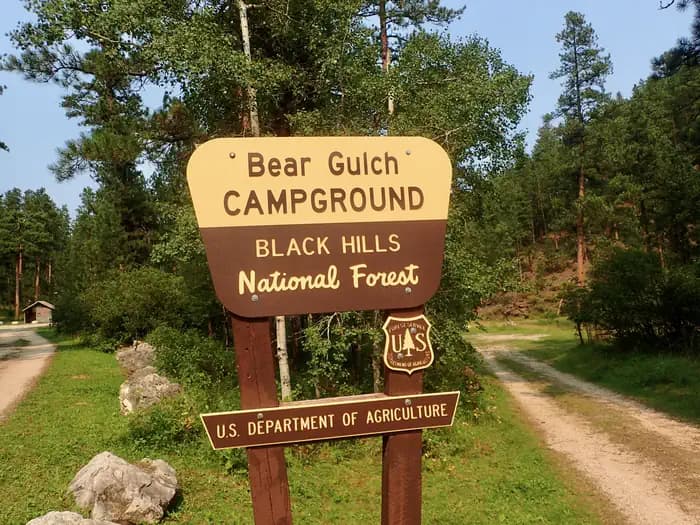
Overview This private access group campsite is isolated among the forested Black Hills of South Dakota, overlooking a private bay on the Pactola Reservoir. Great for group events with up to 40 people, there are eight individual tent sites around a central parking area. The summers are pleasant, and the bay provides a great way to cool off on sunny days (summer temperatures range from highs in the mid-80s, to lows in the mid-50s). It can be reserved from Memorial Day through Labor Day. Recreation Pactola Reservoir is an 800-acre lake, great for water skiing, swimming, fishing and even scuba diving. There is no boat ramp at the campground, but there is a separate marina where you can rent a boat and two boat ramps nearby on the main reservoir. Pactola Point Swim Beach, the Osprey Trail trailhead and a visitor center are within a short drive of the site. Fishing for such sought-after species as brown, rainbow and record lake trout is popular at the reservoir. There is also fishing in nearby Rapid Creek. Facilities Pactola Reservoir is an 800-acre lake, great for water skiing, swimming, fishing and even scuba diving. There is no boat ramp at the campground, but there is a separate marina where you can rent a boat and two boat ramps nearby on the main reservoir. Pactola Point Swim Beach, the Osprey Trail trailhead and a visitor center are within a short drive of the site. Fishing for such sought-after species as brown, rainbow and record lake trout is popular at the reservoir. There is also fishing in nearby Rapid Creek. Natural Features The campground is in a small canyon surrounded by large Ponderosa pine trees on the southern side of the Pactola Reservoir, the largest reservoir in the Black Hills. This canyon was cut from years of water drainage from the surrounding mountains, forming steep slopes on either side of the road leading to the camping area. A variety of wildlife call the Black Hills home, including mule deer, bighorn sheep, elk and wild turkey. Osprey, also known as fish hawks, are a bird of prey that feed on the abundant fish in the lake. Nearby Attractions Bear Gulch is centrally located within the Black Hills and its many forests, lakes, mountains and rivers and sightseeing destinations. Mount Rushmore National Memorial, Custer State Park, Crazy Horse Memorial and Spearfish Canyon Scenic Byway are all under an hour away. Mount Rushmore National Memorial Custer State Park Charges & Cancellations No refunds wll be given for weather or related events
View details →
Overview Roubaix Campground is tucked into a grove of Ponderosa pines along its namesake lake. With a popular swim beach and opportunities for non motorized boating and paddling, campsites are dispersed among four loops, and many offer lake views. At an elevation of 5,500 feet, this camp remains comfortable on hot summer days, and sites are spaced far enough apart to offer ample privacy. This popular camp makes a great base for exploring all the activities and attractions at the lake and in the surrounding area. Recreation Robaix Lake is ideal for swimming, canoeing, kayaking and fishing for brook and rainbow trout. Horseback riders, mountain bikers and off-road vehicle riders have access to a 1-mile multi-use trail that leads to a network of other trails. Facilities Robaix Lake is ideal for swimming, canoeing, kayaking and fishing for brook and rainbow trout. Horseback riders, mountain bikers and off-road vehicle riders have access to a 1-mile multi-use trail that leads to a network of other trails. Natural Features The Black Hills in western South Dakota and northeastern Wyoming feature a varied landscape of rugged rock formations, canyons and gulches, open grassland parks, tumbling streams and deep blue lakes. This secluded lake is small with a shoreline that borders pine forest. contact_info For facility specific information, please call (605) 574-4402. Nearby Attractions The nearby town of Deadwood, South Dakota, is a National Historic Landmark with casinos, Wild West saloons, restaurants and shopping. Mount Rushmore can be reached in under an hour. Charges & Cancellations No refunds will be given for weather or related events.
View details →
Overview Located 13 miles outside Custer, South Dakota, Iron Creek Horse Camp offers a peaceful setting for guests seeking recreation and relaxation in Southeastern South Dakota's Black Hills National Forest. The camp is adjacent to Iron Creek and surrounded by Ponderosa pine forests. Horse enthusiasts will find this setting ideal for exploring wilderness areas and historical sites. Recreation Black Hills National Forest offers visitors a multitude of recreational opportunites throughout all seasons. Hiking, fishing, horseback riding, mountain biking, and riding off-highway vehicles are popular in summer and early autumn. Winter landscapes are ideal for snowshoeing, skiing and snowmobiling. From this campground, visitors can access the Centennial Trail, and parts of the Black Elk Wilderness and Norbeck Wildlife Preserve. Trails weave through the wilderness offering primitive, non-motorized recreational experiences. Facilities Black Hills National Forest offers visitors a multitude of recreational opportunites throughout all seasons. Hiking, fishing, horseback riding, mountain biking, and riding off-highway vehicles are popular in summer and early autumn. Winter landscapes are ideal for snowshoeing, skiing and snowmobiling. From this campground, visitors can access the Centennial Trail, and parts of the Black Elk Wilderness and Norbeck Wildlife Preserve. Trails weave through the wilderness offering primitive, non-motorized recreational experiences. Natural Features Stretching across northeastern Wyoming and western South Dakota, Black Hills National Forest encompasses nearly 1.25 million acres of rugged rock formations, canyons and gulches, open grassland parks, tumbling streams, deep blue lakes, and unique caves. Derived from the Lakota language, the words "Paha Sapa," meaning "hills that are black," honor the dark, pine-covered hills rising several thousand feet above the surrounding prairie. Nearby Black Elk Wilderness lies in the center of the Black Hills National Forest in western South Dakota. The wilderness encompasses the Harney Range, an area long held sacred by American Indians. The wilderness is named after Black Elk, a Oglala Lakota holy man, and is the only wilderness in the Black Hills. Bighorn sheep navigate mountainous terrain, while elk, deer and pronghorn gather in forests and prairies. Bald eagles, hawks, osprey, peregrine falcon, and hundreds of other bird species can be found in the forest, especially along streams, lakes and rivers. Mountain lions, although rarely seen, also call this area home. contact_info For facility specific information, please call (605) 574-4402. Nearby Attractions Possible day trips include Custer State Park with its many buffalo and other wildlife, Crazy Horse Monument and Wind Cave National Park as well as Jewel Cave which is the second longest cave in the world at 159.29 miles. It features sparkling calcite crystals and other rare formations, as well as some of the largest concentrations of passageways in the world. Nearby riding trails treat users to beautiful views throughout their many miles. Charges & Cancellations No refunds will be given for weather or related events.
View details →
Overview Cottonwood Recreation Area is located just downstream of Gavins Point Dam and Lewis & Clark Lake along the western shore of Lake Yankton. The numerous outdoor recreational opportunities attract more than 2 million visitors annually to the Lewis & Clark Lake area, making it one of the most popular recreation destinations in the Upper Great Plains. Lewis & Clark Lake is 31,400-acres in size with more than 90 miles of shoreline is impounded by Gavins Point Dam, which was authorized by the Flood Control Act of 1944, commonly called the Pick-Sloan Plan. For more information about Lewis and Clark Lake, please visit the Gavins Point Project website . Recreation Cottonwood Recreation Area is conveniently located between Lewis and Clark Lake and Lake Yankton. Lewis and Clark Lake is known for great boating, sailing, swimming and other water-based recreation activities. Lake Yankton is popular with families as a popular fishing spot along with the excellent kayaking, canoeing and paddling opportunities. Numerous paved, multi-use trails connect the area with the additional numerous recreation areas located along Lewis and Clark Lake, Lake Yankton and the Missouri River. Lewis and Clark Lake attracts more than 2 million visitors each year to its shores. Recreation opportunities around the lake include camping, fishing, hunting, hiking, boating, sailing, swimming, bird-watching, and photography. For the biking and hiking enthusiasts, three trails are available in the area. They include a paved trail that runs from Yankton to the Gavins Point area, a multi-use trail in the Gavins Point area and the Calumet Bluff hiking trail located near the visitor center. Wintertime activities include ice fishing, cross-country skiing, snowmobiling and sledding. Developed public parks and recreation areas surround the lake above and below Gavins Point Dam. Camping facilities provided by the Corps and the States of South Dakota and Nebraska include marinas, boat ramps, trails, campsites with electricity, modern restrooms, playground equipment and trailer dump stations. Facilities Cottonwood Recreation Area is conveniently located between Lewis and Clark Lake and Lake Yankton. Lewis and Clark Lake is known for great boating, sailing, swimming and other water-based recreation activities. Lake Yankton is popular with families as a popular fishing spot along with the excellent kayaking, canoeing and paddling opportunities. Numerous paved, multi-use trails connect the area with the additional numerous recreation areas located along Lewis and Clark Lake, Lake Yankton and the Missouri River. Lewis and Clark Lake attracts more than 2 million visitors each year to its shores. Recreation opportunities around the lake include camping, fishing, hunting, hiking, boating, sailing, swimming, bird-watching, and photography. For the biking and hiking enthusiasts, three trails are available in the area. They include a paved trail that runs from Yankton to the Gavins Point area, a multi-use trail in the Gavins Point area and the Calumet Bluff hiking trail located near the visitor center. Wintertime activities include ice fishing, cross-country skiing, snowmobiling and sledding. Developed public parks and recreation areas surround the lake above and below Gavins Point Dam. Camping facilities provided by the Corps and the States of South Dakota and Nebraska include marinas, boat ramps, trails, campsites with electricity, modern restrooms, playground equipment and trailer dump stations. Natural Features Cottonwood Recreation Area is located in the in the lush golden chalkstone-lined Missouri River Valley. Many visitors to the lake area prefer to stay at Cottonwood because of the calmer, quieter waters of Lake Yankton, a much smaller lake of approximately 250-acres in size - versus the much larger Lewis and Clark Lake upstream of the dam. Lake Yankton provides excellent habitat for a variety of waterfowl and other bird species. The area abounds with wildlife including Whitetail Deer, turkeys, and other game species. Bald Eagles and other birds of prey are spotted by visitors regularly due to the great fishing opportunities available year-round. contact_info For facility specific information, please call (402) 667-2546. Nearby Attractions The Lewis and Clark Visitor Center : Contains exhibits on the Missouri River and area history including the Lewis and Clark Expedition with stunning views of Lewis and Clark Lake along with the Missouri River. Powerhouse Tours are available on weekends. Please contact the Lewis and Clark Visitor Center at (402) 667-2546 for more information. The Gavins Point National Fish Hatchery and Aquarium Visit nearby Yankton, South Dakota - the historic capitol of the Dakota Territory. Located both upstream and downstream of Lewis and Clark Lake, visit the Missouri National Recreational River . Charges & Cancellations Reservation changes and cancellations can be made on Recreation.gov or by calling 1-877-444-6777. For more information on rules and policies regarding reservation cancellations and changes, please visit: https://www.recreation.gov/rules-reservation-policies .
View details →
Overview Nebraska Tailwaters Campground is nestled along the Nebraska bank of the Missouri River, is a fun-filled camping destination just downstream of Gavins Point Dam and Lewis & Clark Lake. The 31,400-acre Lewis & Clark Lake and Gavins Point Dam are nestled in the golden, chalkstone-lined valley of the Missouri River growing into one of the most popular recreation destinations in the Great Plains. For more information, please visit the Gavins Point Project Website . Recreation Located just below Gavins Point Dam in the dam "Tailwaters" provides exceptional access to the Missouri River. A large 2-lane boat ramp, large parking area is available, along with an accessible fishing pier and many areas for bank fishing. The Lewis and Clark Lake area attracts more than 2 million visitors each year to its shores. Recreation opportunities around the lake include camping, fishing, hunting, hiking, boating, sailing, swimming, bird-watching, and photography. For the biking and hiking enthusiasts, three trails are available in the area. They include a paved trail that runs from Yankton to the Gavins Point area, a multi-use trail in the Gavins Point area and the Calumet Bluff hiking trail located near the visitor center. Wintertime activities include ice fishing, cross-country skiing, snowmobiling and sledding. Developed public parks and recreation areas surround the lake above and below Gavins Point Dam. Camping facilities provided by the Corps and the States of South Dakota and Nebraska include boat ramps, picnic areas, campsites with electricity, modern restrooms, playground equipment and trailer dump stations. Facilities Located just below Gavins Point Dam in the dam "Tailwaters" provides exceptional access to the Missouri River. A large 2-lane boat ramp, large parking area is available, along with an accessible fishing pier and many areas for bank fishing. The Lewis and Clark Lake area attracts more than 2 million visitors each year to its shores. Recreation opportunities around the lake include camping, fishing, hunting, hiking, boating, sailing, swimming, bird-watching, and photography. For the biking and hiking enthusiasts, three trails are available in the area. They include a paved trail that runs from Yankton to the Gavins Point area, a multi-use trail in the Gavins Point area and the Calumet Bluff hiking trail located near the visitor center. Wintertime activities include ice fishing, cross-country skiing, snowmobiling and sledding. Developed public parks and recreation areas surround the lake above and below Gavins Point Dam. Camping facilities provided by the Corps and the States of South Dakota and Nebraska include boat ramps, picnic areas, campsites with electricity, modern restrooms, playground equipment and trailer dump stations. Natural Features The campground sits on the south bank of the Missouri River, along the tailwaters of Gavins Point Dam. Surrounding the area is the golden, chalkstone-lined Missouri River Valley. Nebraska Tailwaters is known for its exceptional Bald Eagle viewing year-round, along with many other birds of prey. contact_info For facility specific information, please call (402) 667-2546. Nearby Attractions The Lewis and Clark Visitor Center , exhibits on Missouri River and area history including the Lewis and Clark Expedition with stunning views of Lewis and Clark Lake along with the Missouri River. Powerhouse Tours are available on weekends. Please contact the Lewis and Clark Visitor Center at (402) 667-2546 for more information. The Gavins Point National Fish Hatchery and Aquarium Visit nearby Yankton, South Dakota - the historic capitol of the Dakota Territory. Charges & Cancellations Reservation changes and cancellations can be made on Recreation.gov or by calling 1-877-444-6777. For more information on rules and policies regarding reservation cancellations and changes, please visit: https://www.recreation.gov/rules-reservation-policies .
View details →
Overview Sheridan North Cove Group Campground, in a forest of Ponderosa pine is along the north shore of Sheridan Lake. This is an ideal setting for large groups and gatherings. Lake views and access to a multitude of recreational opportunities both on land and water draw guests to this part of Black Hills National Forest. Recreation Black Hills National Forest offers a multitude of recreational opportunites throughout all seasons. Hiking, fishing, horseback riding, mountain biking, and riding off-highway vehicles are popular in summer and early autumn. Winter landscapes are ideal for snowshoeing, skiing and snowmobiling. The Dakota Point Trailhead for the popular Centennial Trail is located on the northeast side of Sheridan Lake, as is the Calumet Trailhead for the Flume Trail. At 11 miles (plus a 3-mile loop), the Flume Trail has been designated a National Recreation Trail because of its historical significance to the local people. The Rockerville Flume carried water 20 miles, from Spring Creek west of present day Sheridan Lake, east to the placer diggings near Rockerville. The flume operated until 1885, and the trail follows the actual flume bed for much of its length. Along the way are historic artifacts and parts of the flume itself. Sheridan Lake is an ideal spot for fishing, swimming, boating and water skiing. The lake supports populations of rainbow, brown trout, northern pike and perch. Fly fishing is popular in Spring Creek below the dam, and ice fishing is popular on the lake in winter. Facilities Black Hills National Forest offers a multitude of recreational opportunites throughout all seasons. Hiking, fishing, horseback riding, mountain biking, and riding off-highway vehicles are popular in summer and early autumn. Winter landscapes are ideal for snowshoeing, skiing and snowmobiling. The Dakota Point Trailhead for the popular Centennial Trail is located on the northeast side of Sheridan Lake, as is the Calumet Trailhead for the Flume Trail. At 11 miles (plus a 3-mile loop), the Flume Trail has been designated a National Recreation Trail because of its historical significance to the local people. The Rockerville Flume carried water 20 miles, from Spring Creek west of present day Sheridan Lake, east to the placer diggings near Rockerville. The flume operated until 1885, and the trail follows the actual flume bed for much of its length. Along the way are historic artifacts and parts of the flume itself. Sheridan Lake is an ideal spot for fishing, swimming, boating and water skiing. The lake supports populations of rainbow, brown trout, northern pike and perch. Fly fishing is popular in Spring Creek below the dam, and ice fishing is popular on the lake in winter. Natural Features Located in western South Dakota and northeastern Wyoming, Black Hills National Forest encompasses nearly 1.25 million acres of rugged rock formations, canyons and gulches, open grassland parks, tumbling streams, deep blue lakes, and unique caves. Derived from the Lakota language, the words "Paha Sapa," meaning "hills that are black," honor the dark, pine-covered hills rising several thousand feet above the surrounding prairie. Wildlife in the area abounds. Bighorn sheep navigate mountainous terrain, while elk, deer and pronghorn gather in forests and prairies. Bald eagles, hawks, osprey, peregrine falcon, and hundreds of other bird species can be found in the forest, especially along streams, lakes and rivers. Nearby Attractions Nearby Jewel Cave is the second longest cave in the world at 159.29 miles. It features sparkling calcite crystals and other rare formations, as well as some of the largest concentrations of passageways in the world. Other possible day trips include Mount Rushmore National Memorial, Custer State Park, Crazy Horse Monument, Devils Tower National Monument and Wind Cave National Park. contact_info For facility specific information, please call (605) 574-4402. Charges & Cancellations No refunds will be given for weather or related events.
View details →
Overview This campground lies beneath a canopy of oak and Ponderosa pine on the banks of Grizzly Creek. The site has retained much of its original Civilian Conservation Corps character, and offers visitors recreation and relaxation in Black Hills National Forest. Located along the Iron Mountain Road, it is between Mount Rushmore National Memorial and Custer State Park. A pavillion built by the Civilian Conservation Corps still stands and is available for use by campers. Recreation Black Hills National Forest offers visitors a multitude of recreational opportunites throughout all seasons. Hiking, fishing, horseback riding, mountain biking, and riding off-highway vehicles are popular in summer and early autumn. The winter landscape is ideal for snowshoeing, skiing and snowmobiling. From a nearby trailhead, visitors can access the Centennial Trail and parts of the Black Elk Wilderness and Norbeck Wildlife Preserve. Trails weave through the wilderness for a primitive, non-motorized recreation experience. For those seeking higher elevations, a day-long trek to the summit of nearby Black Elk Peak is worth the effort. Black Elk Peak is the highest natural point in the United States east of the Rocky Mountains. Most of the summit is bare granite and offers expansive views of the surrounding area. An old stone tower (Harney Lookout Tower) at the top, once used as a fire lookout, is still open to hikers. Facilities Black Hills National Forest offers visitors a multitude of recreational opportunites throughout all seasons. Hiking, fishing, horseback riding, mountain biking, and riding off-highway vehicles are popular in summer and early autumn. The winter landscape is ideal for snowshoeing, skiing and snowmobiling. From a nearby trailhead, visitors can access the Centennial Trail and parts of the Black Elk Wilderness and Norbeck Wildlife Preserve. Trails weave through the wilderness for a primitive, non-motorized recreation experience. For those seeking higher elevations, a day-long trek to the summit of nearby Black Elk Peak is worth the effort. Black Elk Peak is the highest natural point in the United States east of the Rocky Mountains. Most of the summit is bare granite and offers expansive views of the surrounding area. An old stone tower (Harney Lookout Tower) at the top, once used as a fire lookout, is still open to hikers. Natural Features Located in western South Dakota and northeastern Wyoming, Black Hills National Forest encompasses nearly 1.25 million acres of rugged rock formations, canyons and gulches, open grassland parks, tumbling streams, deep blue lakes, and unique caves. Derived from the Lakota language, the words "Paha Sapa," meaning "hills that are black," honor the dark, pine-covered hills rising several thousand feet above the surrounding prairie. This campground is located in the Norbeck Wildlife Preserve and is close to the Black Elk Wilderness, South Dakota's only designated wilderness area. This area encompasses the Harney Range, an area long held sacred by American Indians. Wildlife in the area abounds. Bighorn sheep navigate mountainous terrain, while elk, deer and pronghorn gather in forests and prairies. Bald eagles, hawks, osprey, peregrine falcon, and hundreds of other bird species can be found in the forest, especially along streams, lakes and rivers. contact_info For facility specific information, please call (605) 574-4402. Nearby Attractions A short 2 miles away is the fabulous Mount Rushmore National Memorial, which hosts almost 3 million visitors a year. This campground is located on the scenic Iron Mountain Rd. with its famous CCC built Pigtail Bridges and tunnels for breathtaking views of Mt. Rushmore. Possible day trips include Custer State Park with its many buffalo and other wildlife, Crazy Horse Monument and Wind Cave National Park as well as Jewel Cave which is the second longest cave in the world at 159.29 miles. It features sparkling calcite crystals and other rare formations, as well as some of the largest concentrations of passageways in the world. Charges & Cancellations No refunds will be given for weather or related events.
View details →
Overview Left Tailrace Campgound at the U.S. Army Corps of Engineers - Big Bend Project, sits on the shore of Lake Francis Case on the Missouri River below Big Bend Dam. Just upstream of Left Tailrace, Lake Sharpe, a popular recreation destination in the Great Plains,was created by the completion of Big Bend Dam in 1966. Today, approximately 80,000 acres of public lands and water provide a variety of benefits to the public including flood control, recreation, conservation of our natural resources, fish and wildlife habitat, irrigation, and hydropower production. It is possible to view many types of wildlife on the Missouri River at Lake Sharpe. Tribal bison herds can be seen grazing the lake area's grasslands north of the towns of Fort Thompson and Lower Brule. The shoreline areas of the lake also offer excellent waterfowl, upland game birds and big game hunting opportunities. Big game animals include whitetail and mule deer, elk, bison, coyotes and wild turkeys. Waterfowl and upland game birds include ducks, geese, pheasants, prairie chickens, and grouse. Hunting regulations are established and enforced by the State of South Dakota, and the Lower Brule and Crow Creek Tribes. For more information, visit the Big Bend Project website . Recreation Lake Sharpe provides many opportunities for outdoor recreation. Recreation areas vary from primitive to highly developed areas like the Left Tailrace area located below the dam. Facilities at the Left Tailrace include campsites with electrical hookups, comfort stations with showers, a dump station, boat ramp, fish cleaning station, courtesy dock, picnic shelters, tables, grills, drinking water, disc golf, etc. Fishing is the main attraction to the area, with walleye being the primary sport fish, although sauger, smallmouth bass, white bass, channel catfish and northern pike also provide great fishing action. Facilities Lake Sharpe provides many opportunities for outdoor recreation. Recreation areas vary from primitive to highly developed areas like the Left Tailrace area located below the dam. Facilities at the Left Tailrace include campsites with electrical hookups, comfort stations with showers, a dump station, boat ramp, fish cleaning station, courtesy dock, picnic shelters, tables, grills, drinking water, disc golf, etc. Fishing is the main attraction to the area, with walleye being the primary sport fish, although sauger, smallmouth bass, white bass, channel catfish and northern pike also provide great fishing action. Natural Features Left Tailrace Campground is located in central South Dakota, three miles from the town of Fort Thompson, 20 miles from Chamberlain and 65 miles from Pierre, which is the state capitol. Lake Sharpe was the last of the Missouri River reservoirs completed and follows a serpentine course of 80 miles between Big Bend Dam and Pierre, SD. contact_info For facility specific information, please call (605) 245-2255. Nearby Attractions Charges & Cancellations Reservation changes and cancellations can be made on Recreation.gov or by calling 1-877-444-6777. For more information on rules and policies regarding reservation cancellations and changes, please visit: https://www.recreation.gov/rules-reservation-policies .
View details →FAQ
Camping in South Dakota
How many campgrounds are listed in South Dakota?
TheCampVerse currently lists 24 campgrounds in South Dakota.
What campground types are most common in South Dakota?
The most common campground types are Campground.
How can I compare campgrounds in South Dakota?
Use the campground cards and featured links on this page to compare descriptions, amenities, and details before opening each campground profile.
Keep exploring